
When to Euthanize a Dog With Dementia: Signs, Quality of Life and Saying Goodbye
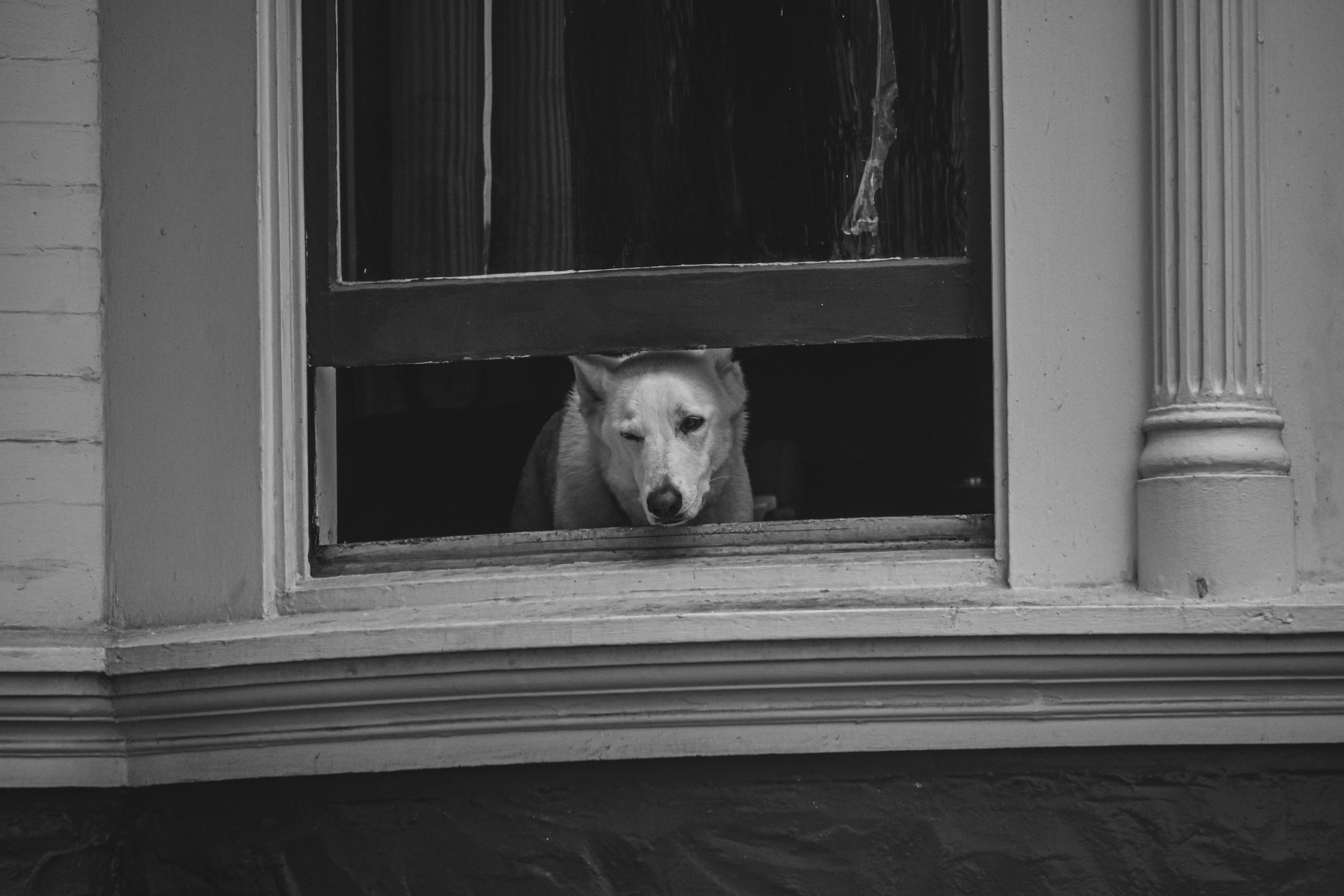
If your dog has started wandering the house at 2 a.m. staring blankly at walls, or forgetting where the back door is after years of knowing the routine perfectly, you are probably already grieving a little, even while your dog is still here. That quiet, creeping loss is one of the hardest parts of canine cognitive dysfunction. And if you have found yourself searching for guidance on when to euthanize a dog with dementia, you are not alone. It is one of the most common questions we hear from families on Long Island and one of the most emotionally complicated ones we help people work through.
This post is not going to give you a checklist that spits out an answer. What we can do is walk you through what canine cognitive dysfunction actually looks like as it progresses, how to think honestly about your dog’s quality of life and what the decision to say goodbye might look like when the time comes.
What Is Canine Cognitive Dysfunction?
Canine cognitive dysfunction (CCD) is a neurological condition associated with aging. Most veterinarians describe it as similar in many ways to Alzheimer’s disease in people. The brain changes over time and those changes affect memory, awareness, sleep and behavior. It is most commonly seen in dogs over 10 or 11 years old, though it can appear earlier in some breeds.
One thing worth saying clearly: CCD is a progressive condition, not a reversible one. There are medications and supplements that may slow progression or ease some symptoms and if your dog has not yet been evaluated by a veterinarian, that is always the right first step. Some symptoms that look like dementia, disorientation, behavior changes, disrupted sleep, can actually be caused by pain, thyroid problems, high blood pressure, urinary tract infections or other treatable conditions. Rule those out first. But if your vet has confirmed cognitive dysfunction, understand that the trajectory is generally one of slow decline. Managing it well can give you more good time together. It does not stop the disease.
What Does Canine Cognitive Dysfunction Look Like at the End of Life?
Early CCD can be subtle. A dog might seem a little more confused at dusk, take longer to respond to their name or occasionally get stuck in a corner. Families often chalk it up to normal aging and sometimes it is mild enough that it barely affects daily life for months or even years.
As the condition progresses, the signs become harder to dismiss. The ones we hear about most often include:
- Pacing or circling, especially at night, sometimes for hours
- Waking up disoriented and distressed in the dark
- Standing and staring at nothing, walls, corners, empty space
- Forgetting familiar people, including family members they have lived with for years
- Getting lost in the house or yard, even in spaces they know well
- Loss of house training after years of reliability
- Anxiety, restlessness or vocalizing that seems disconnected from any obvious cause
- Withdrawing from family interaction or, conversely, becoming clingy and panicked when left alone
- Losing interest in food, play or things they once loved
In the later stages, many dogs stop recognizing their owners reliably. They may seem frightened or agitated much of the time. Sleep is severely disrupted. Some dogs vocalize through the night in a way that clearly reflects distress rather than communication. Eating becomes inconsistent. And because CCD often arrives alongside other age-related conditions, arthritis, organ disease, cancer, the picture becomes layered and complicated. You may be managing several problems at once. If your dog also has mobility challenges, our post on senior dog mobility loss and hind-end weakness covers how that piece often intersects with these late-life decisions.
When to Euthanize a Dog With Dementia: How Do You Actually Know?
This is the question that keeps families up at night, often literally, especially when the dog is already keeping them up too. There is no single threshold, no number on a scale that definitively answers it. But there are honest questions worth sitting with.
The first is about good moments versus hard ones. We often encourage families to track their dog’s day informally, not obsessively, but with honest eyes. How many hours in the day does your dog seem comfortable, engaged and recognizably themselves? How many are spent pacing, crying, confused or distressed? When the hard hours start to outnumber the good ones consistently, that is meaningful information.
The second question is about fear and suffering. CCD can cause something that looks very much like chronic anxiety. A dog who is regularly frightened, disoriented or in distress, even if they are not in physical pain, is still suffering. We sometimes hear families say, “But he’s not in pain.” We understand what they mean and we respect it. But fear and confusion, experienced day after day, are their own form of suffering. That matters.
The third question is one of the hardest: what would your dog choose, if they could? You have known this animal for years. You know what made them happy, what made them uncomfortable and what they would never want. That knowledge is not nothing. It is actually one of the most important things you bring to this decision.
Our quality of life guide walks through a structured way to think about these questions if you want a more concrete framework. And if you are wrestling with guilt about making this call at all, the post making peace with the euthanasia decision speaks directly to that.
What Does the Goodbye Actually Look Like?
For a dog with dementia, the environment matters enormously. Clinic waiting rooms, unfamiliar smells, car rides and strangers can all trigger the anxiety and disorientation that already makes life hard. That is one of the reasons so many families caring for a dog with CCD choose an at-home goodbye. Your dog can be in the place they know best, on their bed, on the couch, in a patch of sunlight in the backyard. They do not have to navigate anything unfamiliar. Neither do you.
We come to you. We work slowly and gently. The appointment is quiet and unhurried. We take care of paw prints and a keepsake during the visit so you do not have to think about any of that in the days afterward. If you want to understand what the appointment itself looks like, this post walks through it step by step.
We serve Nassau County and the western portion of Suffolk County. If you are not sure whether we reach your area, the FAQ page has that information clearly laid out.
You Are Not Giving Up
We want to say this plainly, because it is the thing families most need to hear: choosing euthanasia for a dog with dementia is not giving up on them. It is one of the most loving things a person can do. You are making a decision your dog cannot make for themselves. You are putting their comfort and peace above your own need for more time. That is not a failure. That is what good caretaking looks like at the very end.
If you are in that in-between place right now, not sure whether it is time, not sure how to even begin thinking about it, you do not have to figure it out alone. We are here to talk it through with you, without pressure and without judgment. Reach out whenever you are ready.
You may also find these posts helpful: If I Hold On Too Long, We Both Suffer and How Do I Know When It’s Time: A Compassionate Guide to End-of-Life Decisions for Your Dog.
Ready to Talk?
If you are considering at-home euthanasia for your pet, we are here to help. Learn more about our at-home euthanasia process, view our pricing, or schedule an appointment when you are ready.
Have questions? Visit our FAQ page or contact us at (516) 646-2172.